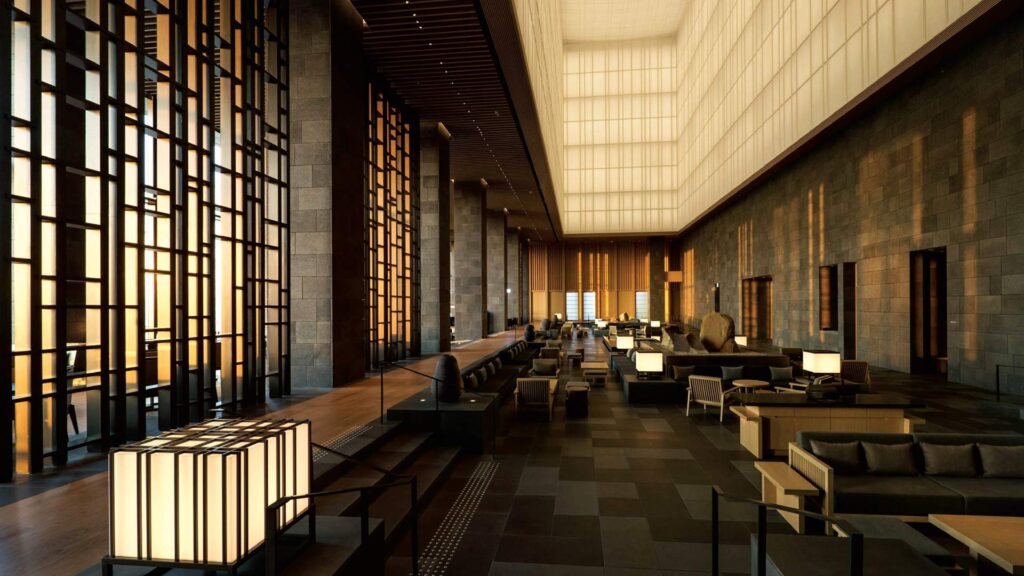
Once upon a time, the hotel lobby was a threshold, a pause between the world outside and the world within. In India, that story began with the Taj Mahal Palace, Mumbai, the country’s first five-star hotel. Its vaulted ceilings, Corinthian pillars, and glittering chandeliers made the lobby an emblem of grandeur and set the stage for how the nation would experience luxury.
By the early 2000s, spectacle entered the picture. Sahara Star, Mumbai, which opened in 2004, enclosed an entire tropical garden under a glazed dome. Bridges, waterfalls, and mature palms created an atrium that was less lobby and more immersive landscape. A year later, The LaLiT Mumbai redefined scale with its seven-storey atrium, Asia’s largest, rising 96 feet high under 18 grand sunroofs. Within this vast volume, the lobby became a cultural stage: ‘Tripathga’, a 50-foot handcrafted ceramic mural by Manmohan Bhaskar, and ‘Ashwamedha Turang’, a bronze horse by Satish Gujral symbolising sovereignty and triumph, dominate the space. Live music by Zoheb Khan of the Banaras Gharana underscores the grandeur, turning arrival into a performance as much as a passage. With more than 3,000sq.mtrs. of vertical drama, it was not just an entry point but a civic-scale gathering place.
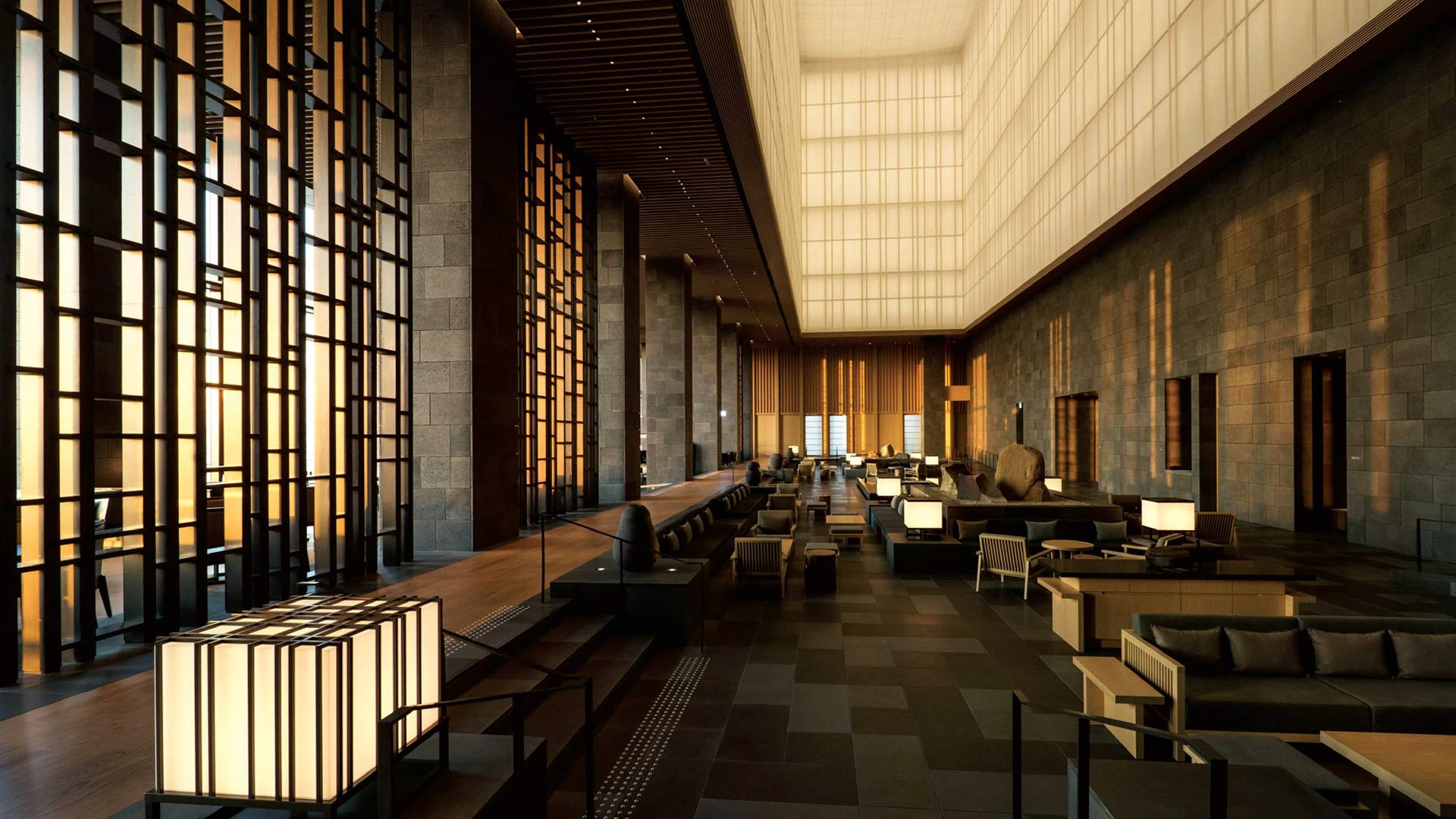
These milestones proved that the Indian lobby was no longer a corridor but an event. The Taj Mahal Palace, Sahara Star, and The LaLiT Mumbai remain touchstones of design, admired for their grandeur and theatre even today. Yet the conversation has shifted once more. Social media’s appetite for backdrops, technology’s erosion of the front desk, globalisation’s search for authenticity, and the economics of revenue generation are reshaping lobbies into stages, salons, and social condensers. From heritage to hybridity, the hotel lobby has become the heartbeat of hospitality.