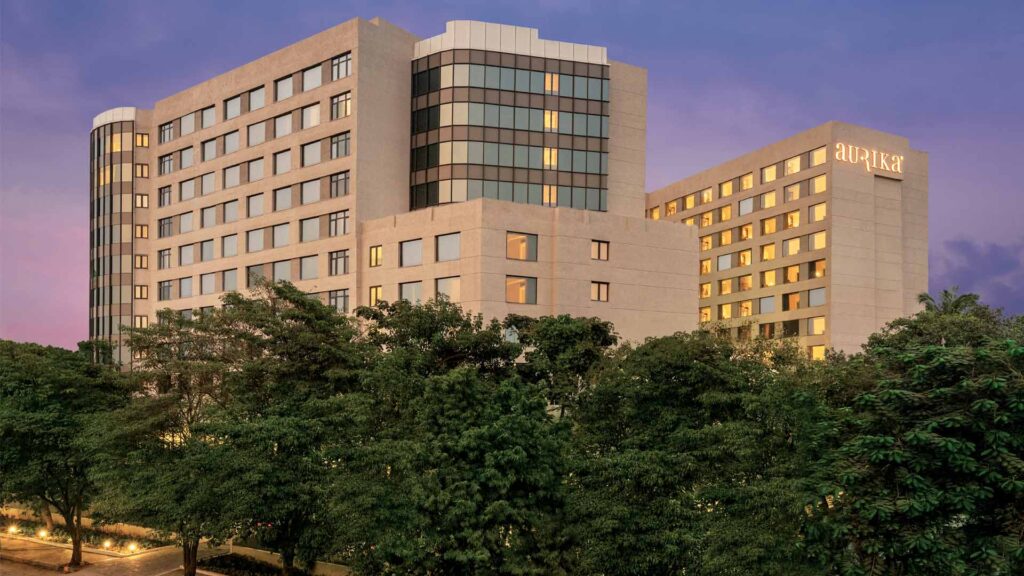
Exclusive experiences, extraordinary ambience, contextual design, and sensitivity to sustainability—Lemon Tree Hotels’ luxury brand Aurika has carved a distinct niche within India’s hospitality universe by holding these core values close to its heart.
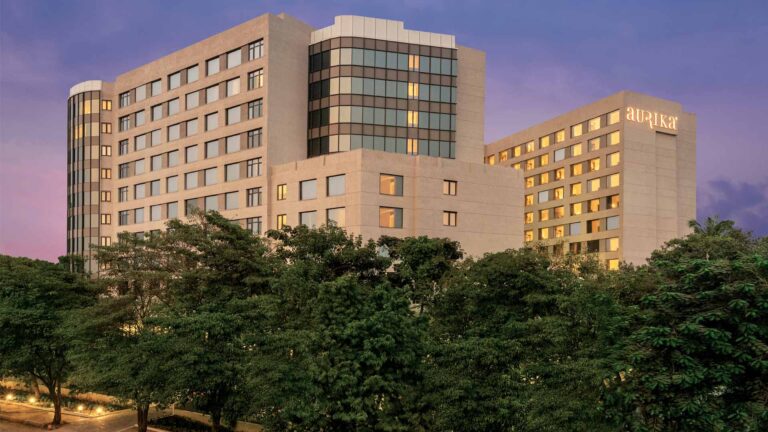
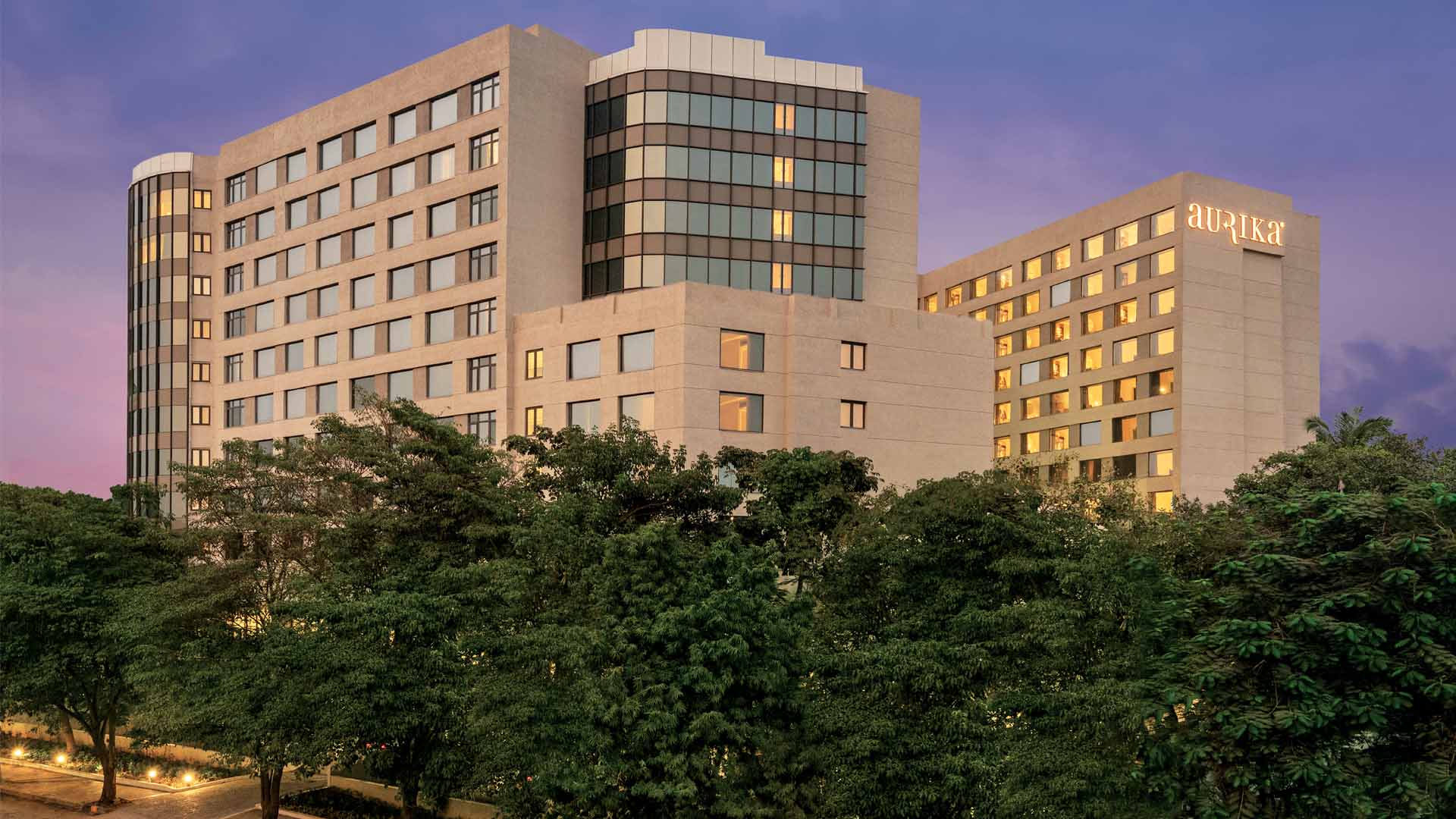
The latest pearl in its string of properties is Aurika Mumbai Skycity, a massive 669-key hotel occupying a 9641.55 sq.mtr. plot near the city’s international airport. This is India’s largest hotel based on the number of rooms. While the hotel is aligned with the brand ethos of carving a unique presence through design, in this case, the narrative responds to the site limitations posed by the compactness of the plot and aviation rules.
The idea
While the architectural response to the challenges was creating smaller spatial volumes with lesser heights than usual to enable the creation of the required number of keys, the multi-pronged interior design strategy aimed to add illusory space through colour, reflective expanses, surface finishing techniques and patterns.
“Subtlety was the mantra we followed,” says architect Bobby Mukherji, whose eponymous studio was entrusted with creating a hotel per the brand’s guidelines: “Beyond the unusual”. Ritu Ranjan, Senior Vice President – Aesthetics and Design, Lemon Tree Hotels, collaborated with the architect in this transformative process. “We used an understated colour scheme uplifted in places with gentle veins of natural stone, deep jewel tones of upholstery, texturing techniques such as moulding and fluting, and striking objets d’art to create an immersive ambience,” elucidates the architect, adding that the overarching interior theme is Art Deco, a style popular in Mumbai (then Bombay) during the 1940s.
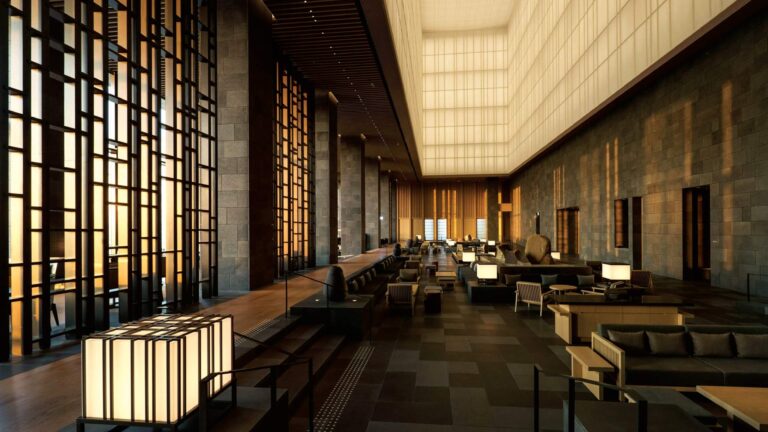
The lobby itself illustrates this stylistic direction with its series of ribbed, marble-facia-ed reception counters deployed against panelled white walls and an unfurling of graphic flooring rendered from neutral-coloured stone. The nearby Tea Lounge carves a distinct place for itself within the overall lobby space with its plum-coloured single-seaters, teal banquette seating and round metal centre tables which, says Mukherji, explore jewellery giant Tiffany’s iconic Atlas collection with its Roman numeral motif, playfully twirling the intricate band from that collection on his fingers.
Near the entrance, mirror-encased double-height columns amplify the delicacy of the globular glass pendants sourced from Moradabad. Collectively, the elements create a nuanced, richly detailed environment, and successfully divert the attention from its compact size (read low ceiling height).
While the design team curated a palette that abided by the aesthetics of the brand and hotel, they were careful to filter their material choices based on ease of maintenance and site conditions. So out went heavy carpeting and dark wood, and in came delicately-grained marble, light area rugs and rich upholstery, among others, which evoke the feeling of luxury while being more suitable to the destination. Most of these elements, barring a few that had to be necessarily procured from abroad, were made in India—reflecting on the brand, and indeed the parent company’s, philosophy of being vocal for local.