India is travelling like never before. Domestic passenger numbers have surged past pre- pandemic levels, international routes are expanding at pace, and airports are no longer treated as mere transit points but as powerful statements of intent. Increasingly, they function as destinations in their own right—places where first impressions are formed, time is spent, and identity is encountered. In the last decade alone, the country has quietly assembled a portfolio of aviation architecture that stands shoulder to shoulder with the world’s best—from Delhi’s light-filled Terminal 3 and Mumbai’s sculptural Terminal 2, to Bengaluru’s garden-led Terminal 2 and Hyderabad’s efficient, art-forward hub.
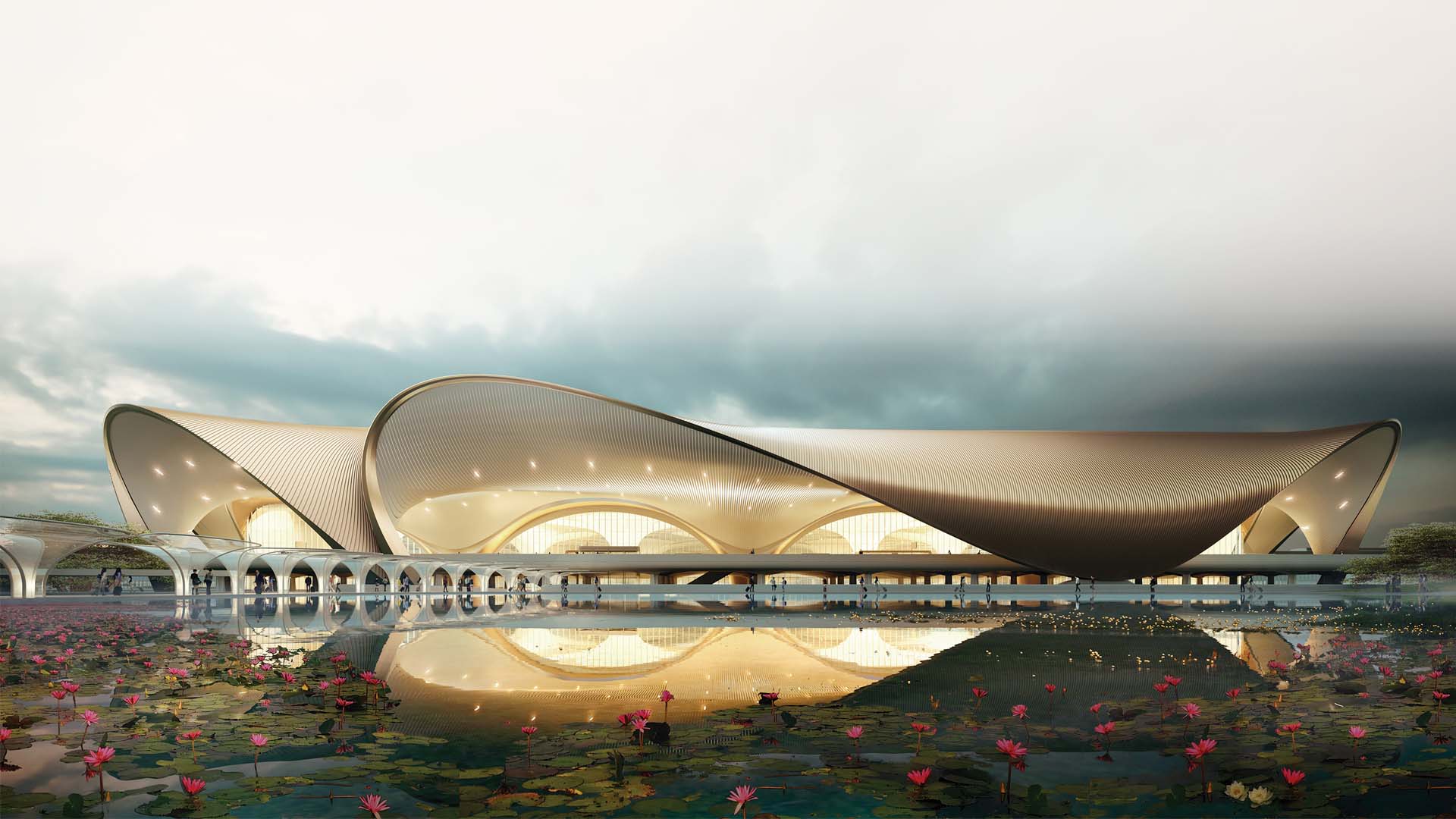
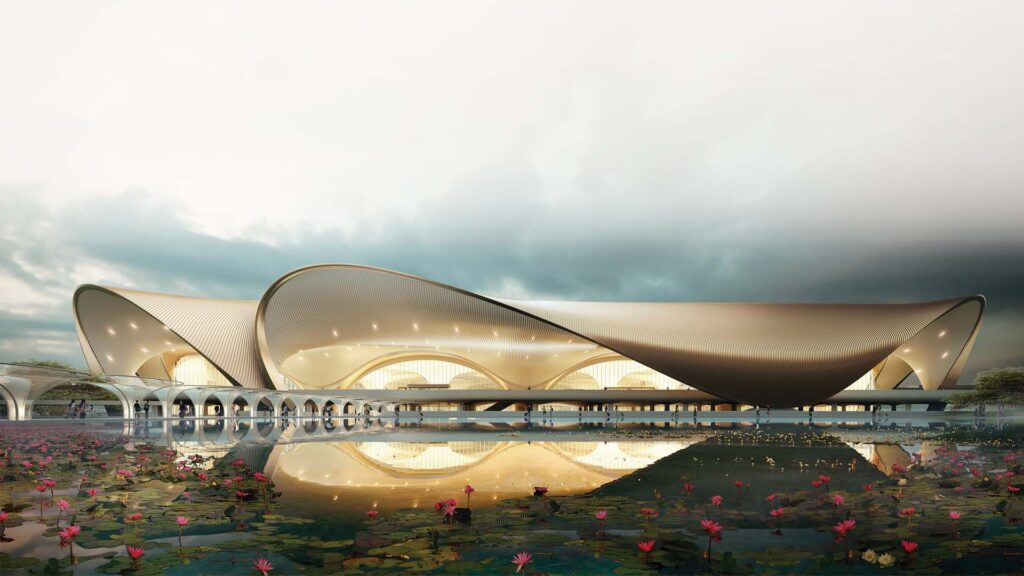
It is into this confident, fast-moving landscape that the Navi Mumbai International Airport (NMIA) enters—not as an add-on or overflow facility, but as a long-anticipated second act to India’s financial capital. Designed by Zaha Hadid Architects (ZHA), NMIA arrives with a clarity of ambition: to handle scale without stress, to embed cultural meaning without spectacle, and to offer travellers an experience that feels unmistakably Indian yet globally fluent.
Now operational, the airport is more than an addition to India’s aviation infrastructure. It reflects a generational shift in how the country is beginning to imagine its gateways to the world. Inaugurated by Prime Minister Narendra Modi, the airport was framed as part of India’s next phase of infrastructure-led growth, with emphasis placed on connectivity, regional development and the role of world-class airports in shaping a confident global image for the country.