An insider’s itinerary through art venues, historic quarters, cafés, bars, and restaurants, with the Kochi-Muziris Biennale at its cultural core.
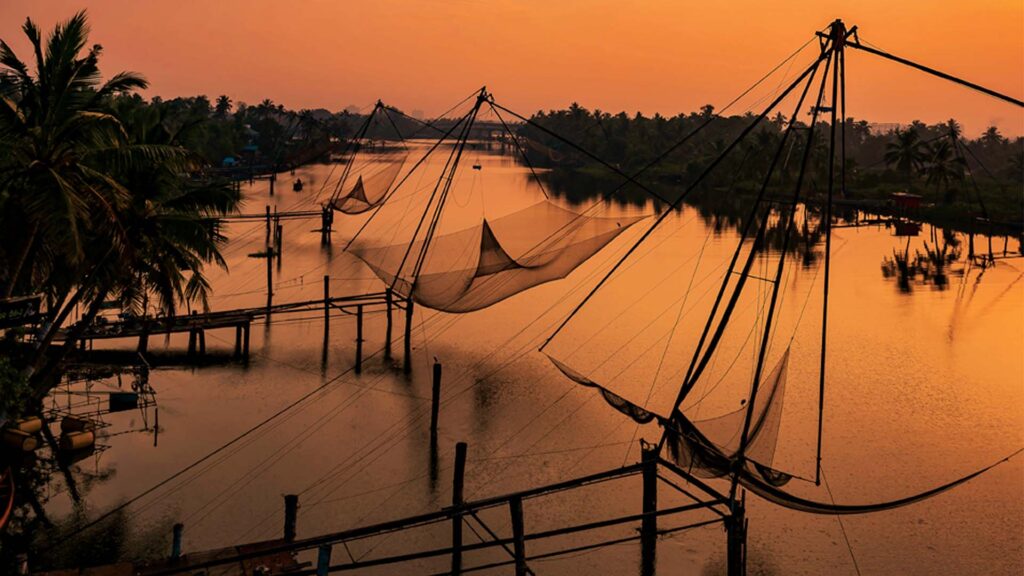
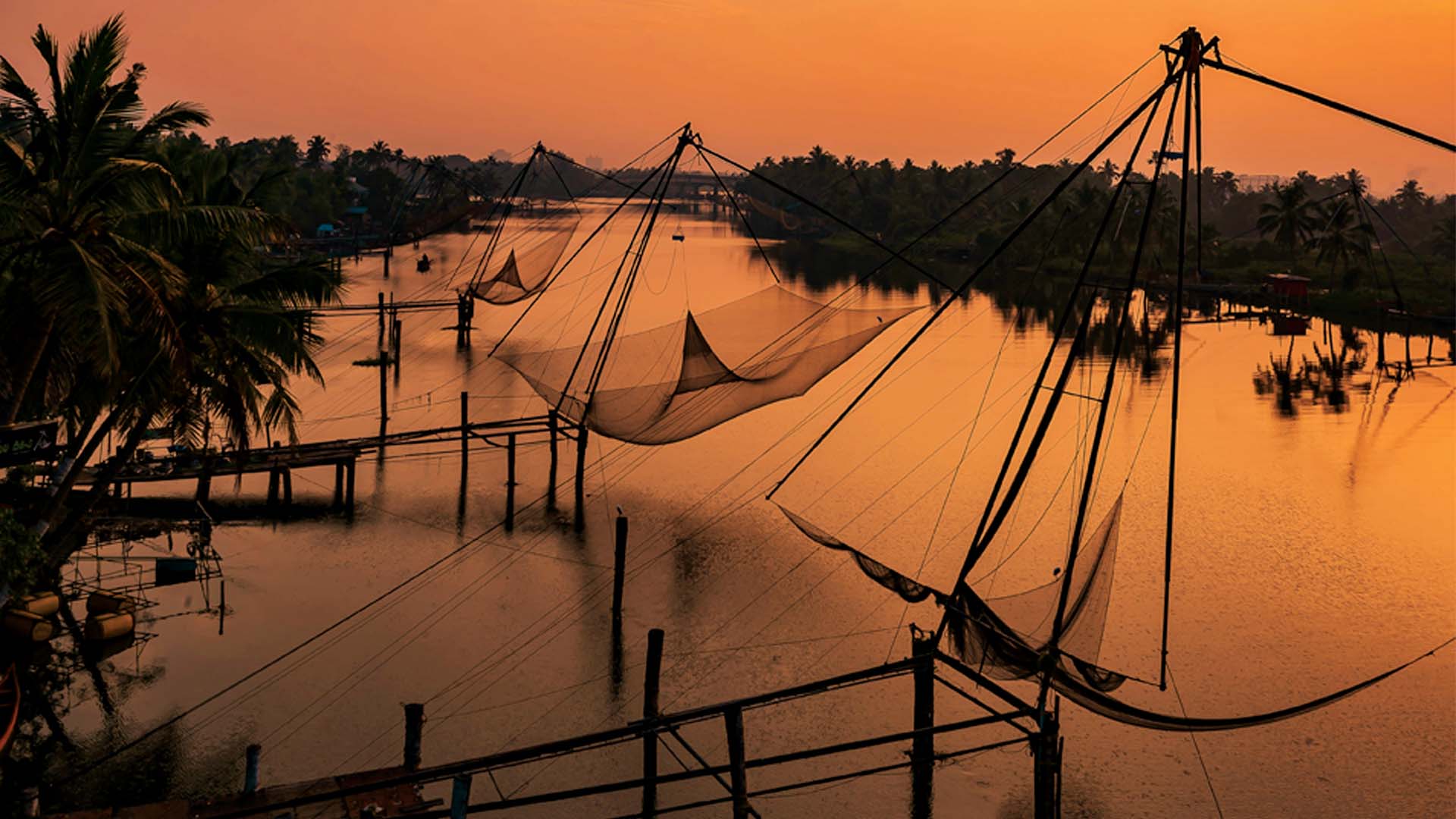
Kochi, a coastal city in Kerala, feels like a quiet conversation between centuries. The ‘Queen of the Arabian Sea,’ euphemistically referred to as Kerala’s commercial hub, is a unique ecosystem that spans mainland Ernakulam, the historic Fort Kochi island, Mattancherry, and smaller islands. Ancient spice routes meet contemporary art here; Chinese fishing nets share shorelines with boutique hotels, cafés, and galleries. Shaped by Arab, Portuguese, Dutch, and British influences, Kochi seamlessly integrates its history into its architecture, cuisine, and daily life.
Fort Kochi’s history is one of conquests and change. The Dutch seized it from the Portuguese in the late 17th century, dismantling much of their stronghold. The British, arriving in 1795, cleared what remained.
Today, only a fragment of the original wall survives, built into the Bastion Bungalow, now the Ernakulam District Heritage Museum. Portuguese, Dutch, and British colonial architecture, the iconic Chinese fishing nets, and a vibrant, diverse culture have drawn travellers in recent years. Inventive newcomers have revived crumbling houses, transforming them into hotels, cafés, and stores. At its heart, Kochi is unhurried, culturally rich, and sea-bound—more atmosphere than spectacle.
This guide to 36 hours (or 3 days) in Fort Kochi covers art, culture, heritage, and the 6th Kochi Muziris Biennale.